
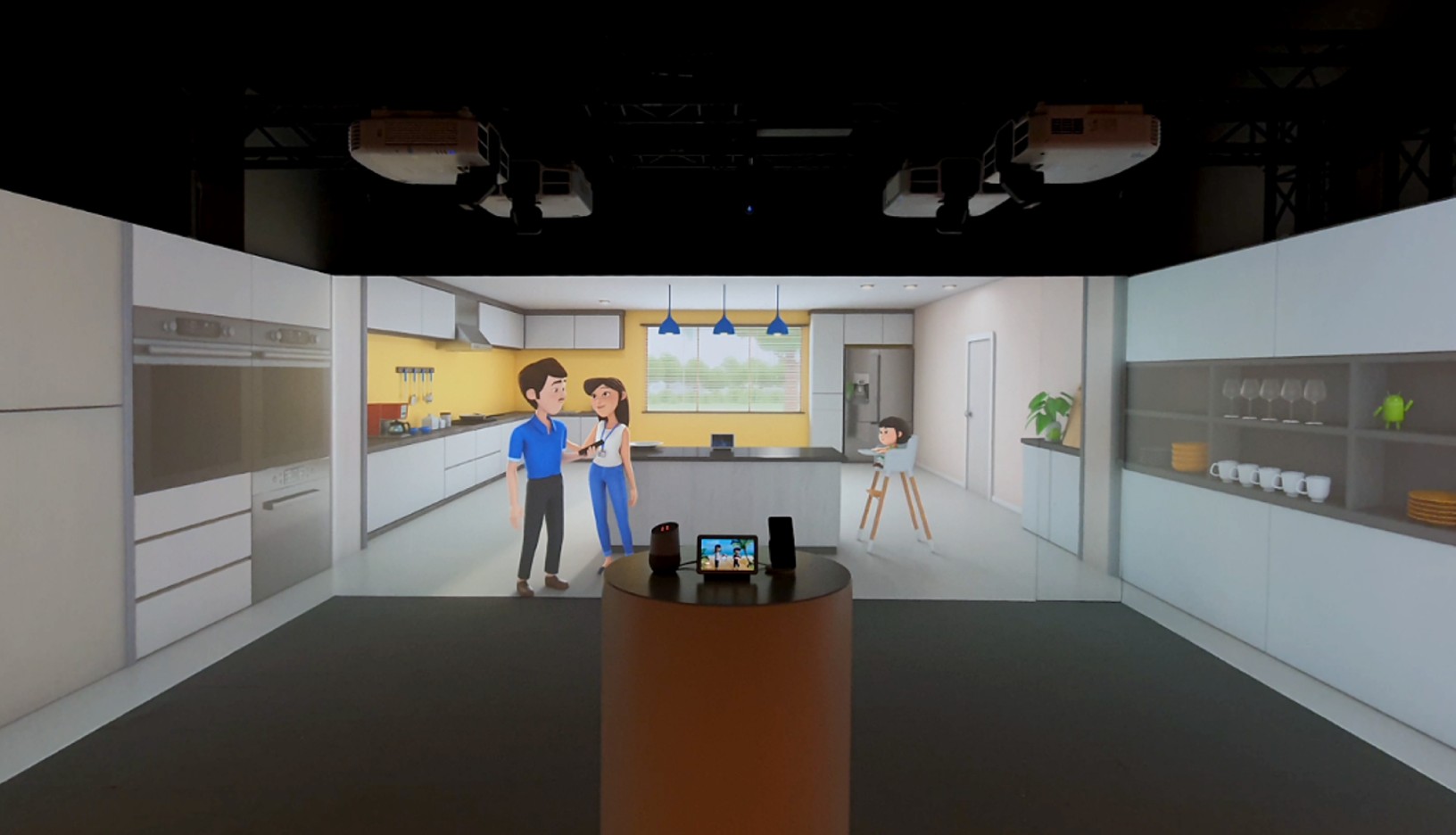
A voice-activated immersive experience room created for Google APAC, designed to help visitors understand how Google Assistant could fit naturally into everyday life.
Rather than presenting the technology as a product demo, the room transformed Google Assistant into an interactive family story. Guests used spoken prompts to help guide a family through daily routines, moving between smart home, mobile and lifestyle moments across Google Assistant, Nest and Pixel devices.
The experience combined spatial design, projection-mapped 3D animation, motion capture, voice interaction and narrative UX to make smart home technology feel simple, useful and human.
Scope: Experience Design, Spatial Design, Interactive Storytelling, Voice UX, 3D Animation, Motion Capture, Projection Mapping, Smart Home Product Demonstration, Technical Integration
Visitors entered a cinematic environment where animated characters moved through everyday scenarios: waking up, planning the day, managing the home, finding information, controlling devices and staying connected. At key moments, guests were invited to speak prompts aloud, allowing Google Assistant to continue the story and trigger the next part of the experience.
The interaction was intentionally simple. Clear on-screen cues helped visitors understand what to say, while the animation responded in a way that made the technology feel immediate and intuitive. This turned a passive product explanation into an active demonstration of how voice technology could support real daily behaviour.
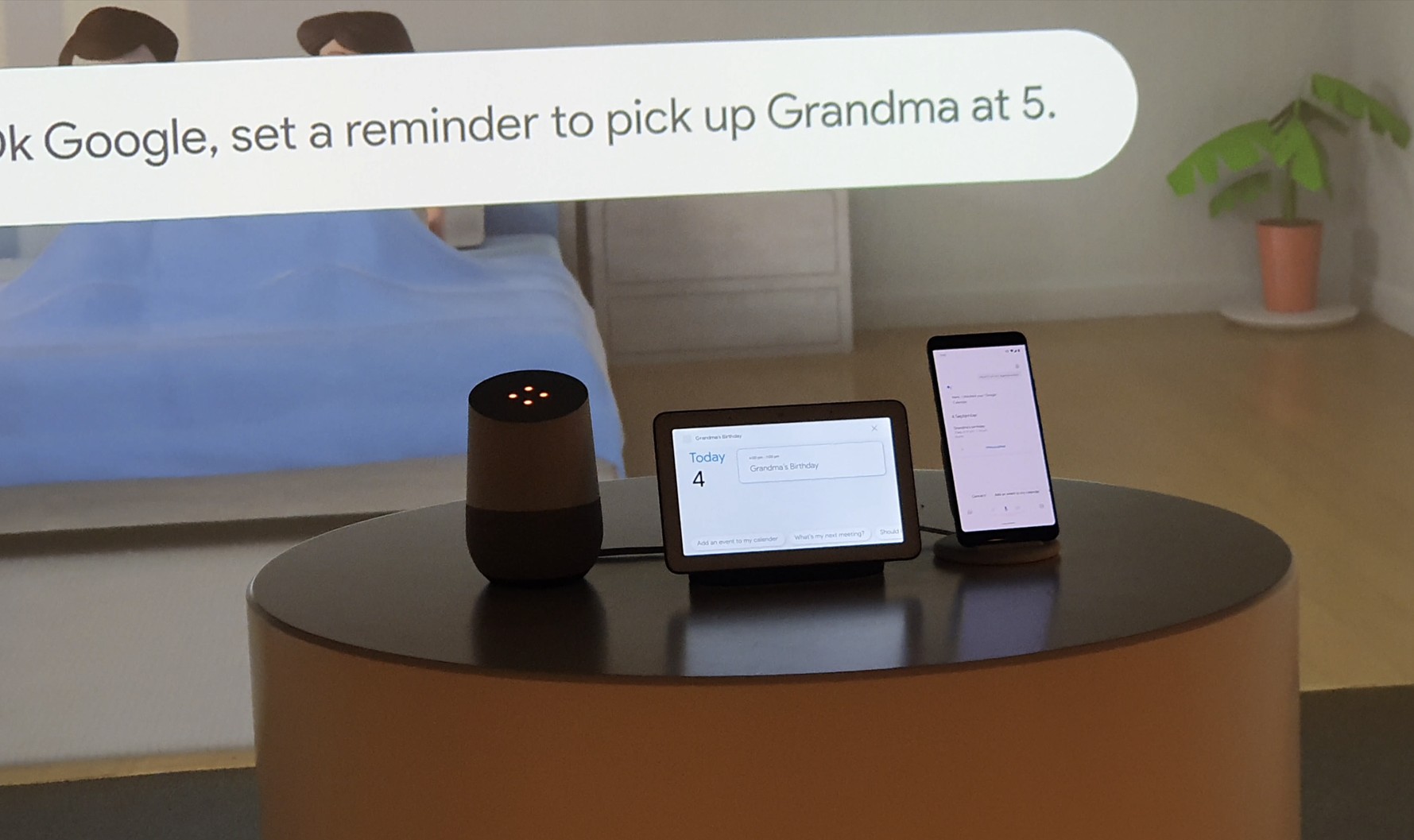
The central idea was to make Google Assistant feel less like a piece of technology and more like a helpful presence within the home.
We built the experience around relatable family moments instead of technical features. Each scene showed a practical benefit — controlling the home, finding useful information, managing routines or connecting devices — through a story that visitors could influence with their own voice.
This helped reduce friction around voice technology by showing it in context: not as a novelty, but as something easy to use, accessible and useful across generations.
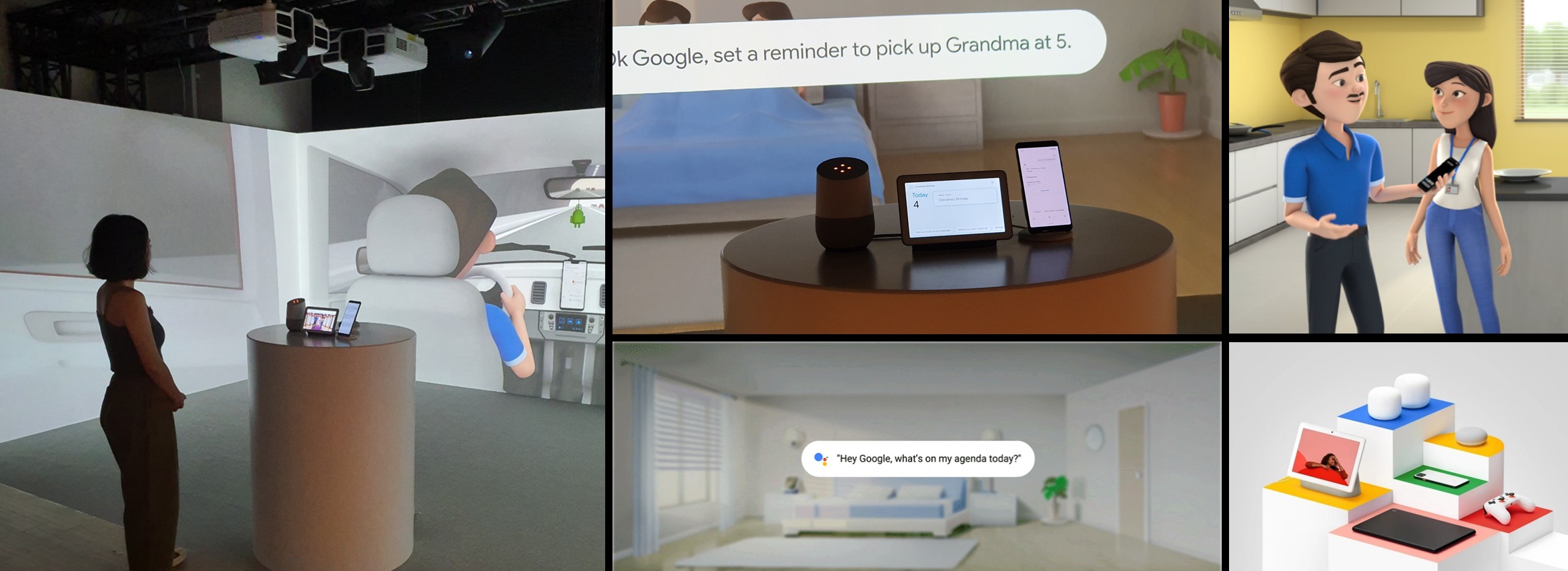
The experience used projection-mapped 3D animation to turn the room into a responsive story world.
Animated characters were created using full-body and facial motion capture, giving the performance a more natural and human quality. Voice prompts, screen cues and device moments were designed around the Google Assistant ecosystem, allowing visitors to understand how Nest, Pixel and smart home products could work together.
Technology included: projection mapping, 3D animation, character animation, motion capture, spatial audio, voice-led interaction design, smart device integration and guided UX scripting.
The Google Assistant Room helped turn product education into a memorable physical experience.
By placing Google Assistant inside a story-led environment, the room gave visitors, partners and stakeholders a clearer understanding of how voice technology could support everyday life. It created a more accessible way to demonstrate smart home products while encouraging conversation, participation and product understanding.
The experience also showed how an experience centre can move beyond a standard showroom, using immersive storytelling to make technology more relatable, memorable and easier to adopt.

